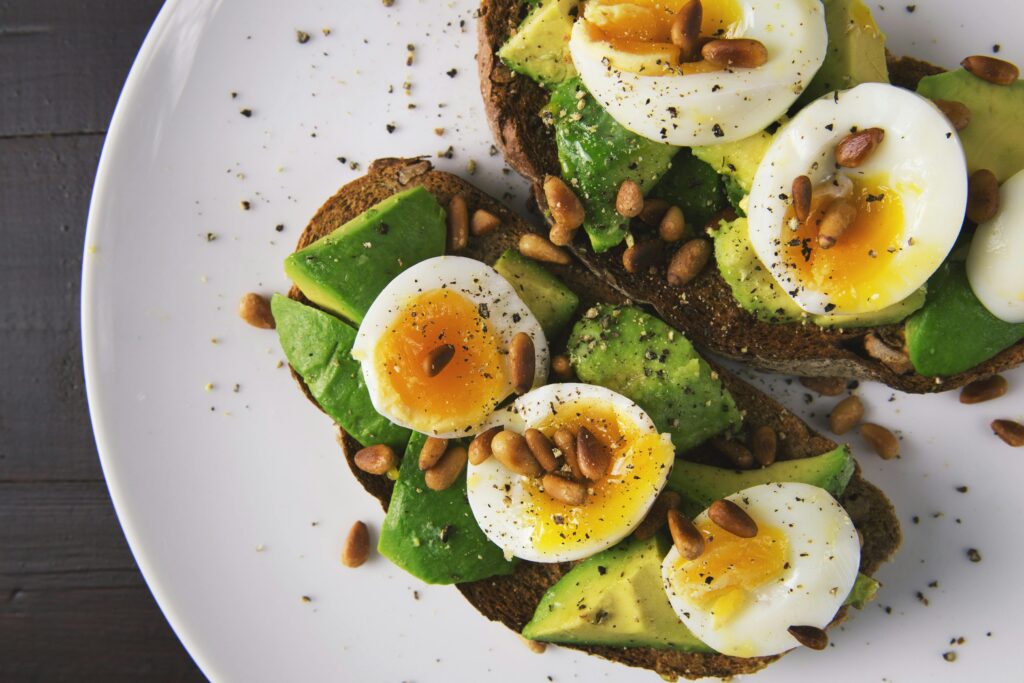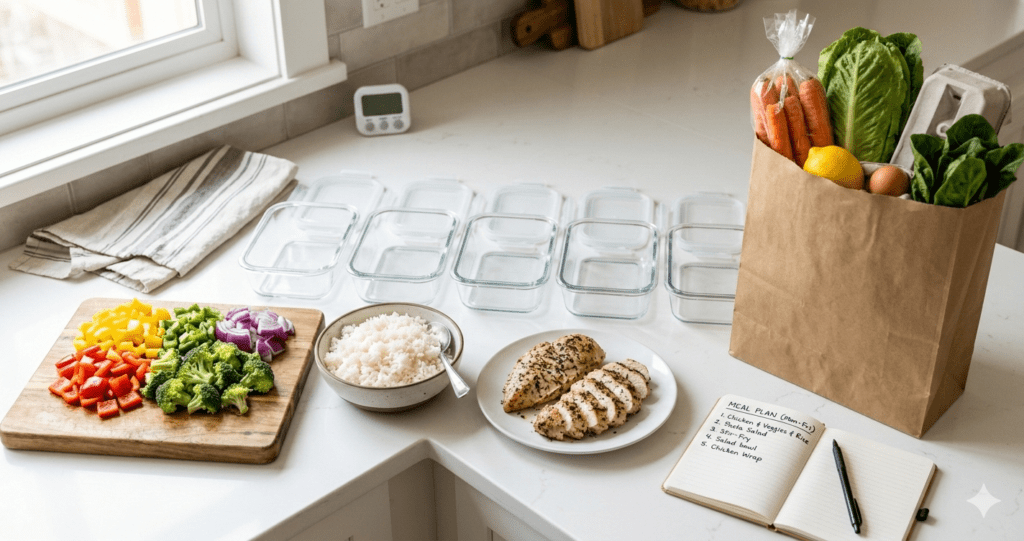
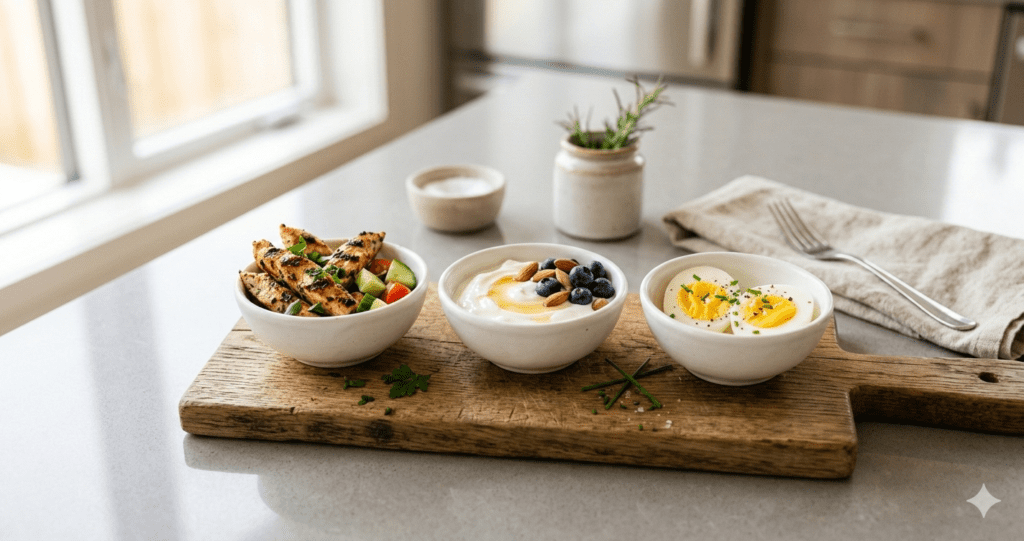
High protein meals for a GLP-1 diet can be tricky to figure out. You’re not as hungry as you used to be. Portions that once felt normal now feel overwhelming. But your body still needs protein — maybe more than ever.
If you’re on Ozempic, Wegovy, Mounjaro, or any GLP-1 medication, you’ve probably noticed that eating feels… different. Your appetite is smaller, food sits heavier, and some meals you used to love now make you feel nauseous.
The problem? Most high-protein recipes are built for people who want to eat more. Big portions. Heavy sauces. Calorie-dense everything.
That’s not what you need right now.
This guide gives you 10 high-protein meals specifically designed for smaller appetites — light on volume, packed with protein, gentle on your stomach, and easy to prep.
Want the complete 7-day plan with every macro counted?
The High-Protein Meal Prep Blueprint gives you all 7 days, a grocery list under $50, and a 2-hour Sunday prep guide.
Get the Blueprint - $7Note: This is not medical advice. We are not doctors or dietitians. If you’re on GLP-1 medication, work with your healthcare provider to determine your specific protein needs. Costs and macros are approximate.
Our Testing Notes : We tested these 10 meals over two weeks with portion sizes designed for reduced appetites. The Greek yogurt parfait and egg muffins were the easiest to eat on low-appetite days. The shrimp stir-fry was the hardest — too much volume for some. Start with the smaller meals and work your way up.
Why Protein Matters More on GLP-1 Medications
When you eat less food overall, your body can start breaking down muscle for energy — especially if your meals are mostly carbs or fats. That’s why doctors and dietitians often recommend prioritizing protein when you’re on GLP-1 medications.
Here’s the general idea:
- Protein preserves muscle mass while you lose fat
- It helps you feel satisfied even with smaller meals
- It stabilizes blood sugar, which can reduce nausea
- It supports recovery if you’re exercising alongside your medication
Most sources suggest aiming for 20–30g of protein per meal when on GLP-1 drugs, but your doctor can give you personalized guidance
For general protein guidelines, see the USDA Dietary Guidelines. For more about how GLP-1 medications work, visit Diabetes UK’s semaglutide guide.
What Makes a Good GLP-1-Friendly Meal?
Not all high-protein meals work well on a GLP-1 diet. Based on what many users report, the best meals tend to be:
- Small but protein-dense (high protein per bite, not per plate)
- Low in heavy fats (greasy foods often trigger nausea)
- Moist and soft (dry, tough food is harder to eat with reduced appetite)
- Easy to reheat (you might not finish a meal in one sitting)
- Flavorful but not overwhelming (strong smells can be off-putting)
1. Greek Yogurt Protein Bowl (28g protein)
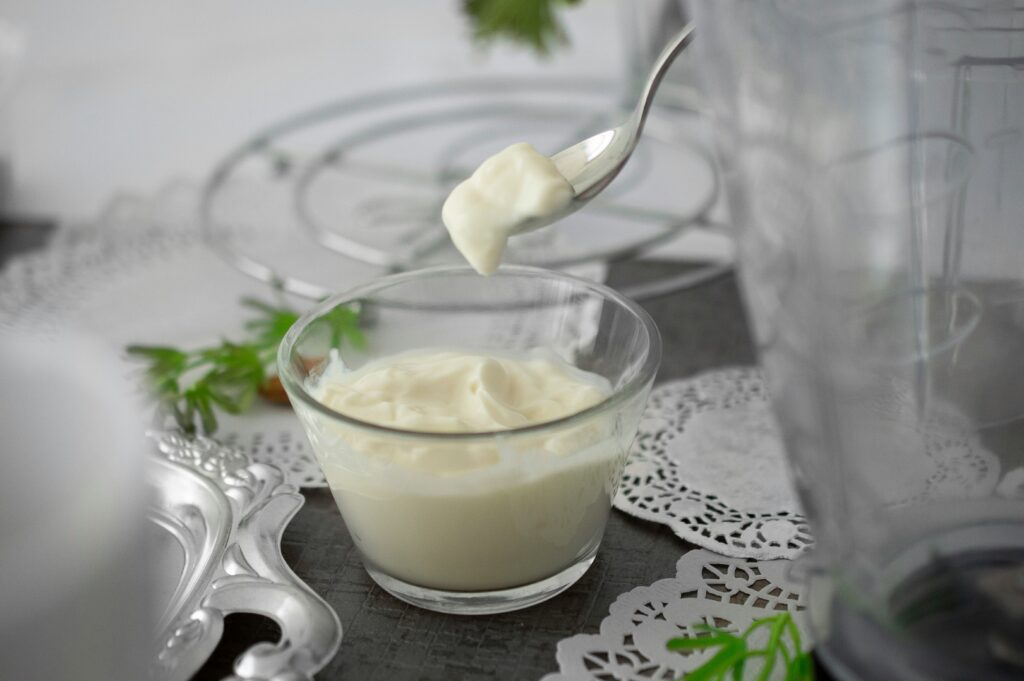
This is the easiest high-protein meal you can make — no cooking required. Greek yogurt is naturally high in protein and gentle on the stomach.
Ingredients
- 1 cup plain Greek yogurt (0% or 2%)
- 1 tbsp peanut butter or almond butter
- 1 tbsp chia seeds
- ½ banana, sliced
- Drizzle of honey (optional)
Quick Steps
- Scoop yogurt into a bowl.
- Top with nut butter, chia seeds, and banana slices.
- Drizzle honey if you like a touch of sweetness.
GLP-1 Notes
Start with half the bowl if your appetite is low — you can finish the rest later. This meal keeps well in the fridge for a few hours.
Approx. macros: 28g protein · ~320 kcal · Cost: ~$2.50
2. Cottage Cheese & Tuna Stuffed Avocado (32g protein)
Cottage cheese is having a major comeback — and for good reason. It’s soft, protein-packed, and easy to eat in small amounts.
Ingredients
- ½ large avocado
- ½ cup cottage cheese
- 1 small can tuna (in water), drained
- Squeeze of lemon
- Salt, pepper, everything bagel seasoning
Quick Steps
- Scoop a little extra space in the avocado half.
- Mix cottage cheese and tuna with lemon and seasoning.
- Pile the mixture into the avocado.
GLP-1 Notes
This is calorie-dense for its small size, which is perfect when you can only eat a few bites. The healthy fats from avocado also help with nutrient absorption.
Approx. macros: 32g protein · ~350 kcal · Cost: ~$3.00
3. Egg Muffins (Meal Prep Friendly) (24g protein for 3 muffins)

Egg muffins are small, portable, and you can eat one or three depending on how you feel that day. Perfect for GLP-1 users who need flexibility.
Ingredients (makes 12 muffins)
- 8 large eggs
- ½ cup shredded cheese
- ½ cup diced bell peppers
- ¼ cup diced onion
- Salt, pepper, garlic powder
Quick Steps
- Preheat oven to 375°F (190°C). Grease a muffin tin.
- Whisk eggs with salt, pepper, and garlic powder.
- Divide veggies and cheese into muffin cups.
- Pour egg mixture evenly into each cup (about ¾ full).
- Bake 18–20 minutes until set and slightly golden.
Meal Prep Notes
Store in the fridge for up to 4 days. Reheat in microwave for 30 seconds. You can also freeze them for up to 2 months.
GLP-1 Notes
Eat 1–3 depending on appetite. They’re small enough to eat slowly without pressure to finish a whole plate.
Approx. macros (3 muffins): 24g protein · ~280 kcal · Cost: ~$1.80
4. Chicken & Rice Soup (Protein-Packed) (30g protein)
Soups are often the most tolerable food on GLP-1 medications. They’re warm, soft, hydrating, and easy to sip slowly.
Ingredients (4 servings)
- 2 chicken breasts (about 400g)
- 1 cup uncooked rice
- 2 carrots, diced
- 2 celery stalks, diced
- 6 cups chicken broth (low sodium)
- 1 tsp garlic powder, salt, pepper
Quick Steps
- Bring broth to a boil. Add rice, carrots, and celery.
- Add chicken breasts whole. Reduce heat and simmer 25 minutes.
- Remove chicken, shred with two forks, return to pot.
- Season and serve.
Meal Prep Notes
Keeps in fridge for 4–5 days. Freezes well for up to 3 months. The rice will absorb broth over time — add a splash of water when reheating.
GLP-1 Notes
Sip slowly. The broth helps with hydration, which is important on GLP-1 medications. Many users report soup is one of the easiest meals to tolerate.
Approx. macros (1 serving): 30g protein · ~340 kcal · Cost: ~$2.80
5. Shrimp & Zucchini Noodles (26g protein)
Light, fresh, and high in protein without feeling heavy. Zucchini noodles keep the volume low while still giving you that “noodle” satisfaction.
Ingredients
- 150g shrimp (peeled, deveined)
- 2 medium zucchini, spiralized
- 1 tbsp olive oil
- 2 cloves garlic, minced
- Juice of ½ lemon
- Red pepper flakes, salt
Quick Steps
- Heat olive oil in a pan. Sauté garlic for 30 seconds.
- Add shrimp, cook 2–3 minutes per side until pink.
- Toss in zucchini noodles, cook 2 minutes (don’t overcook — they’ll get watery).
- Squeeze lemon, season, and serve.
GLP-1 Notes
This meal is very light and easy to digest. If you can tolerate seafood, shrimp is one of the best protein sources — very high protein per calorie.
Approx. macros: 26g protein · ~250 kcal · Cost: ~$4.50
6. Protein Smoothie (No Powder Needed) (25g protein)
When you really can’t eat solid food, a smoothie can deliver the protein you need without any chewing required.
Ingredients
- 1 cup Greek yogurt
- ½ cup milk (any kind)
- 1 tbsp peanut butter
- ½ frozen banana
- Ice cubes
Quick Steps
- Blend everything until smooth.
- Drink slowly over 20–30 minutes.
GLP-1 Notes
Sip — don’t chug. Drinking too fast on GLP-1 meds can cause nausea. Keep it cold; many users report cold foods are easier to tolerate.
Approx. macros: 25g protein · ~310 kcal · Cost: ~$2.00
7. Turkey & Cheese Roll-Ups (22g protein)
Zero cooking. Zero effort. These are perfect for days when even standing in the kitchen feels like too much.
Ingredients
- 4 slices deli turkey (look for low-sodium)
- 2 slices Swiss or cheddar cheese
- Mustard or hummus
- Lettuce leaves (optional)
Quick Steps
- Lay out turkey slices.
- Place half a cheese slice on each.
- Add a thin spread of mustard or hummus.
- Roll up tightly. Eat as-is or wrap in lettuce.
GLP-1 Notes
You can eat 1 or 4 — totally flexible. Keep the rolls in the fridge for grab-and-go snacking throughout the day.
Approx. macros (4 roll-ups): 22g protein · ~200 kcal · Cost: ~$2.50
8. Lentil & Egg Bowl (28g protein)
Lentils are soft, fiber-rich, and pair beautifully with eggs. This combo is gentle on the stomach and incredibly affordable.
Ingredients
- ½ cup cooked lentils (canned is fine — rinse them)
- 2 eggs
- 1 tsp cumin
- Salt, pepper
- Hot sauce or salsa (optional)
Quick Steps
- Warm lentils in a pan with cumin, salt, and pepper.
- Fry or poach 2 eggs to your preference.
- Serve eggs over the lentils. Add hot sauce if desired.
GLP-1 Notes
Lentils are high in fiber which helps with digestion — a common concern on GLP-1 meds. Start with a small portion.
Approx. macros: 28g protein · ~330 kcal · Cost: ~$1.50
9. Salmon Bites with Cucumber Salad (30g protein)
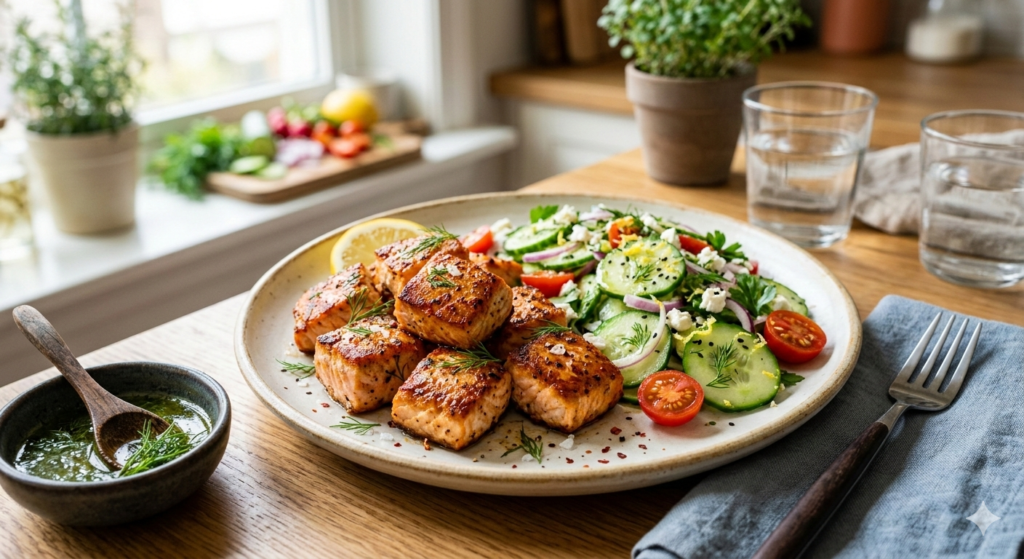
Salmon is one of the best proteins you can eat — rich in omega-3s and incredibly nutrient-dense per bite.
Ingredients
- 1 salmon fillet (about 150g)
- 1 tbsp soy sauce
- 1 tsp honey
- 1 cucumber, diced
- 1 tbsp rice vinegar
- Sesame seeds
Quick Steps
- Cut salmon into bite-sized cubes.
- Mix soy sauce and honey. Marinate salmon for 5 minutes.
- Pan-sear salmon bites 2 minutes per side.
- Toss cucumber with rice vinegar and sesame seeds.
- Serve together.
GLP-1 Notes
The bite-sized format makes it easy to eat slowly and stop when you’re full. Cucumber is hydrating and refreshing — many GLP-1 users find cold, crunchy foods appealing.
Approx. macros: 30g protein · ~310 kcal · Cost: ~$5.00
10. Overnight Protein Oats (22g protein)
Prep the night before, grab from the fridge in the morning. Cold, soft, and easy to eat in small bites.
Ingredients
- ½ cup rolled oats
- ½ cup Greek yogurt
- ½ cup milk
- 1 tbsp chia seeds
- 1 tbsp maple syrup or honey
- Berries for topping
Quick Steps
- Mix oats, yogurt, milk, chia seeds, and sweetener in a jar.
- Refrigerate overnight (or at least 4 hours).
- Top with berries before eating.
GLP-1 Notes
Eat half now, half later — overnight oats keep well all day in the fridge. The combination of protein from yogurt and fiber from oats makes this very gentle on the stomach.
Approx. macros: 22g protein · ~350 kcal · Cost: ~$2.00
Tips for Eating High Protein on GLP-1 Medications
Here are some practical tips that many GLP-1 users have found helpful:
Eat protein first. When you sit down to eat, start with the protein before touching carbs or vegetables. Your appetite may disappear quickly, so get the important stuff in first.
Small plates, frequent meals. Instead of 3 big meals, try 4–5 smaller ones throughout the day. This helps you hit your protein goals without overwhelming your stomach.
Keep it cold or warm. Many GLP-1 users report that room-temperature food is the hardest to tolerate. Try eating food either cold (yogurt, smoothies) or warm (soups, eggs).
Stay hydrated — but not during meals. Drink water between meals, not with meals. Liquid + food can increase feelings of fullness and nausea.
Prep ahead. On days when you feel good, prep meals for days when you don’t. Egg muffins, soups, and overnight oats are perfect for this.
FAQ
How much protein should I eat on Ozempic?
Many healthcare providers suggest 60–100g of protein per day for GLP-1 users, but this varies based on your weight, activity level, and goals. Consult your doctor for personalized advice.
What foods should I avoid on GLP-1 medications?
Many users report difficulty with greasy foods, very spicy foods, carbonated drinks, and large portions. Focus on lean proteins, soft textures, and smaller meals.
Can I meal prep these recipes?
Yes! Egg muffins, soup, overnight oats, and turkey roll-ups all prep well for 3–5 days.
I feel nauseous after eating protein — what should I do?
Try softer protein sources (yogurt, eggs, smoothies) and eat very slowly. If nausea persists, talk to your prescribing doctor about adjusting your dose or timing.
Final Thoughts
Eating enough protein on a GLP-1 diet takes some adjustment, but it doesn’t have to be complicated. Start with the meals that appeal to you most, prep a few on Sunday, and don’t pressure yourself to eat “normal” portions.
Your appetite is different now — and that’s okay. The goal is to protect your muscle, fuel your body, and make the process sustainable.
Helpful resources (external):
- USDA FoodData Central — Nutritional data
- MyPlate Protein Guide — USDA protein recommendations
Related posts (internal):