The hardest part of eating high-protein isn’t the cooking — it’s standing in the grocery store with no plan, throwing random things in the cart, and ending up with a $90 bill and nothing that goes together.
I’ve been there more times than I’d like to admit. So I built a system: a high protein grocery list that I buy almost every week, with minor swaps depending on what’s on sale. It costs between $40–$60 per week (for one person) and covers all my meals.
This guide breaks down exactly what to buy, what it costs, how much protein you’re getting, and how to turn it all into meals without overcomplicating things.
Note: All prices are approximate US averages. Your local costs may vary. Nutrition info is for general guidance only.
High Protein Grocery List Budget: The Golden Rules
Before I share the actual list, here are the rules I follow every single week. They sound simple, but they cut my grocery bill by about 30% when I actually started following them consistently.
Rule 1: Plan meals before you shop. Not the other way around. Decide on 3–4 recipes for the week, write down the ingredients, and buy only that. Impulse buys are the enemy.
Rule 2: Buy protein in bulk, flavor in small amounts. A 2-pack of chicken thighs, a dozen eggs, and a bag of lentils should take up most of your budget. Spices, sauces, and fresh herbs are supporting players.
Rule 3: Embrace frozen and canned. Frozen vegetables and canned beans are just as nutritious as fresh, last way longer, and cost a fraction. There’s zero shame in a freezer full of frozen broccoli.
Rule 4: Check the bottom shelf. Grocery stores put the most expensive items at eye level. The cheaper store-brand versions are usually on the bottom shelf. Same product, different label.
Rule 5: One shopping trip per week. Every extra trip to the store is an opportunity to spend money on things you don’t need.
Tier 1: The Protein Foundation (Buy Every Week)
These are the staples — the non-negotiables that form the base of your high-protein eating. Buy these every week without overthinking it.
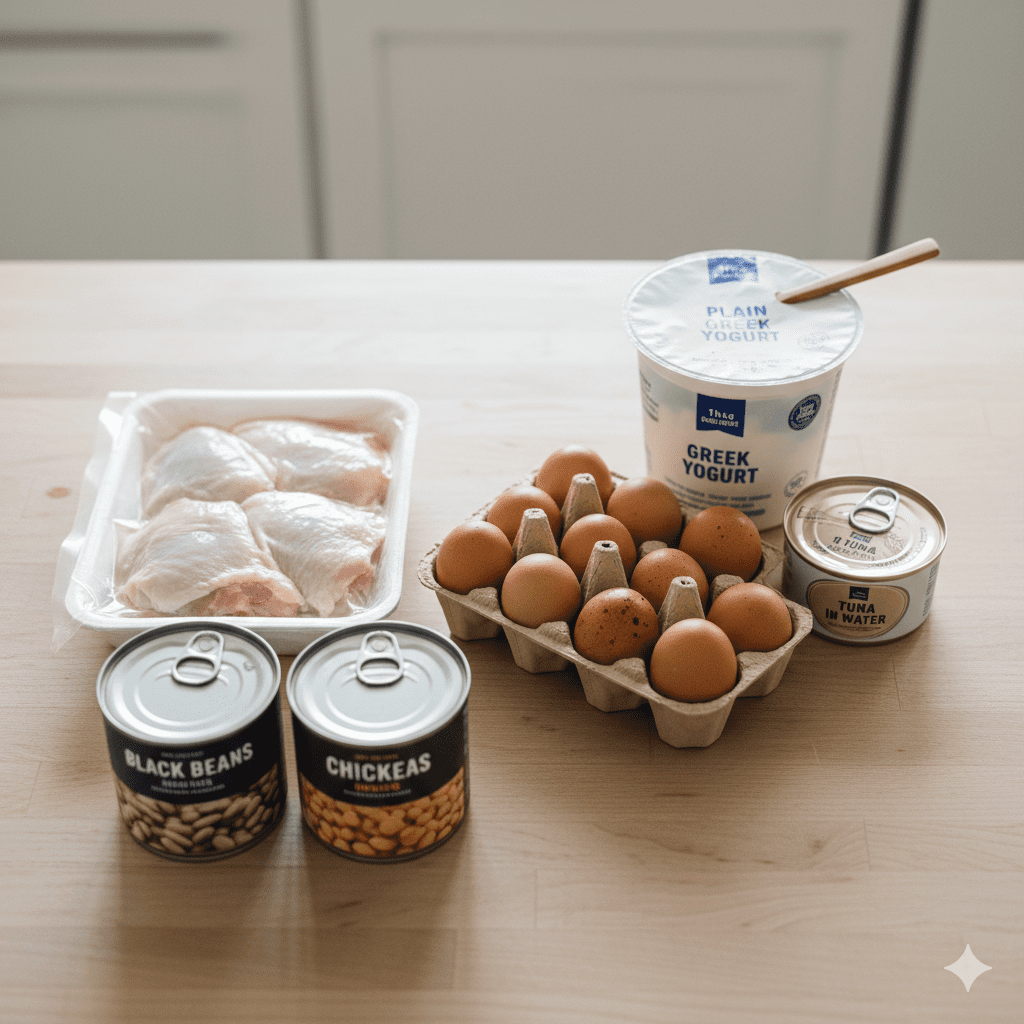
Eggs (1–2 dozen)
- Cost: ~$3.00–$5.00 per dozen
- Protein: 6g per egg
- Why: The most versatile protein on earth. Scrambled, fried, boiled, baked into muffins, added to fried rice — eggs go with everything. They’re also one of the cheapest proteins per gram.
- Pro tip: Hard-boil a batch of 6–8 on Sunday. Instant high-protein snack for the week.
Chicken Thighs (bone-in or boneless, ~1 kg)
- Cost: ~$4.00–$6.00 per kg
- Protein: ~20g per 100g (cooked)
- Why: Cheaper than breast, more flavorful, and harder to overcook. Bone-in is even cheaper — the bone adds flavor and keeps the meat juicy.
- Pro tip: Buy the family pack (usually 2+ kg) and freeze half in labeled portions.
Canned Beans (2–3 cans: black, kidney, chickpeas)
- Cost: ~$0.80–$1.20 per can
- Protein: 7–9g per ½ cup
- Why: Cheap, shelf-stable, ready to eat. Beans add protein AND fiber to any meal. They’re the secret weapon of budget cooking.
- Pro tip: Dried beans are even cheaper but take longer to prepare. Canned is fine — just rinse them to reduce sodium.
Canned Tuna or Salmon (2–3 cans)
- Cost: ~$1.50–$2.50 per can
- Protein: 25g per can
- Why: Shelf-stable, no cooking required, and packed with protein and omega-3s. Tuna salad, tuna melts, tuna pasta — the options are endless.
- Pro tip: Buy “in water” rather than “in oil” — same protein, fewer calories.
Greek Yogurt (500g–1 kg tub)
- Cost: ~$4.00–$6.00
- Protein: 10g per 100g (plain, 0% fat)
- Why: High protein, versatile (breakfast bowls, sauces, dips, smoothies), and keeps well in the fridge. The big tub is always cheaper per gram than individual cups.
- Pro tip: Plain Greek yogurt is the way to go. Flavored versions are loaded with sugar. Add your own honey and fruit.
Tier 2: The Carb Base (Buy Weekly)
Protein alone won’t keep you full or fuel your workouts. These affordable carbs round out your meals.
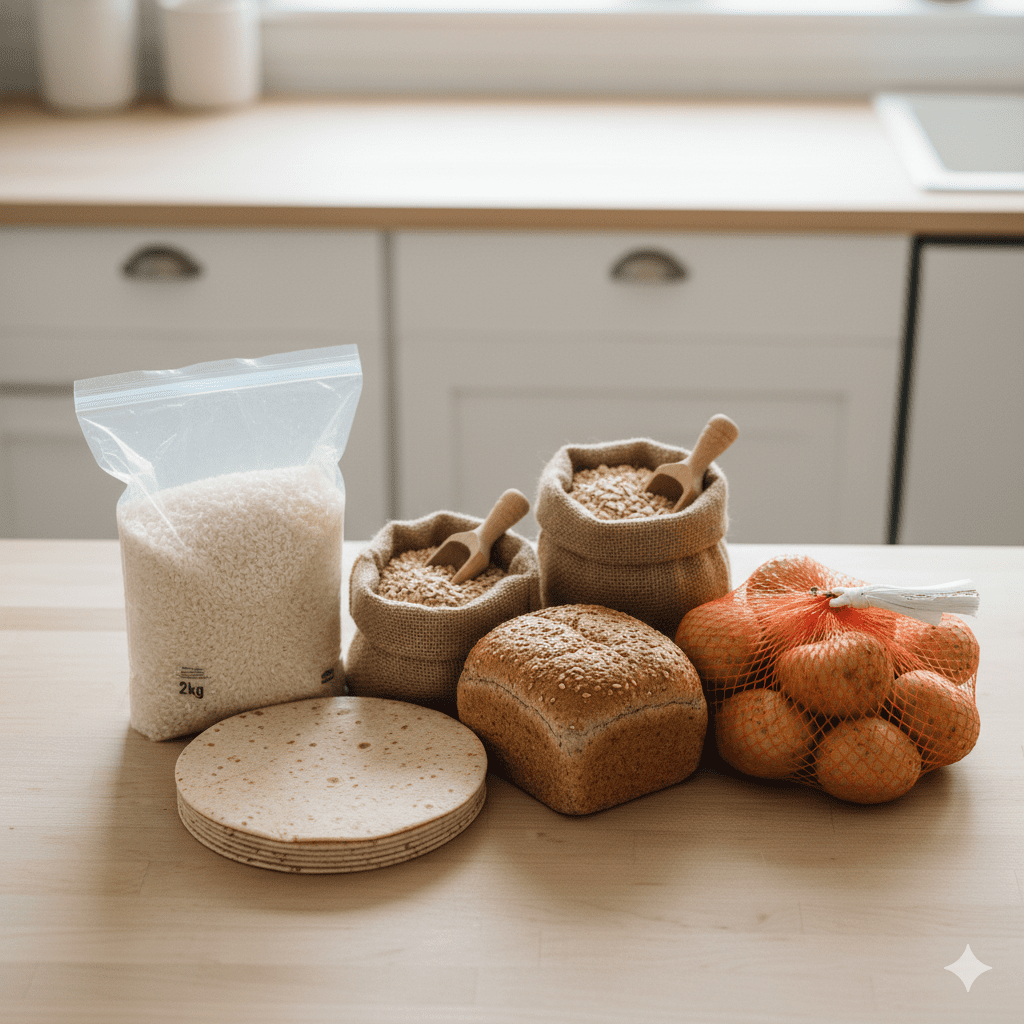
Rice (1–2 kg bag)
- Cost: ~$2.00–$4.00
- Why: The universal side dish. Cook a big batch on Sunday and use it all week in bowls, stir-fries, and fried rice.
- Pro tip: A rice cooker is a worthwhile investment — set it and forget it, perfect rice every time.
Oats (1 kg bag)
- Cost: ~$2.00–$3.00
- Protein: 13g per 100g (dry) — higher than most grains
- Why: Breakfast for pennies. Overnight oats, stovetop porridge, or blended into smoothies. They’re also surprisingly high in protein for a grain.
Whole-Wheat Bread or Tortillas
- Cost: ~$2.00–$3.50
- Why: Quick carb vehicle for eggs, tuna, or peanut butter. Tortillas work for wraps, quesadillas, and breakfast burritos.
Potatoes (2 kg bag)
- Cost: ~$2.00–$3.00
- Why: The cheapest carb that actually fills you up. Baked, mashed, roasted, or in stews. Sweet potatoes work too if they’re on sale.
Tier 3: Vegetables (Buy Weekly)
Don’t skip the vegetables — they add volume, fiber, and micronutrients that protein and carbs don’t provide. The trick is buying the cheapest ones that last the longest.
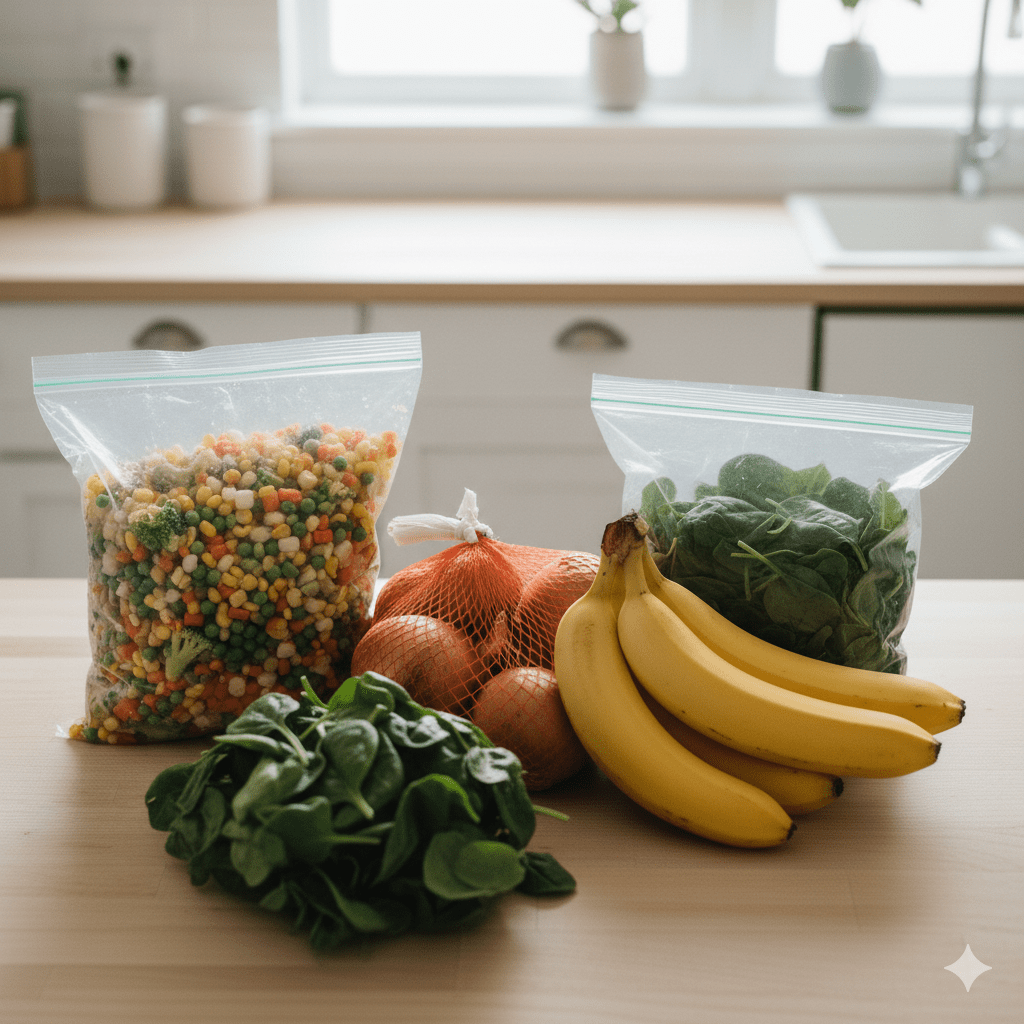
Frozen Mixed Vegetables (1–2 bags)
- Cost: ~$1.50–$2.50 per bag
- Why: Cheaper than fresh, lasts months in the freezer, and just as nutritious. Broccoli, peas, corn, carrots — buy whatever mix you like.
Onions (1 bag)
- Cost: ~$1.50–$2.00
- Why: The flavor base for almost every recipe. They last 2–3 weeks in a cool, dry place.
Baby Spinach or Bagged Salad (1 bag)
- Cost: ~$2.00–$3.00
- Why: Throw a handful into scrambles, stir-fries, bowls, or smoothies. Easy way to add greens without any prep.
Bananas (1 bunch)
- Cost: ~$0.50–$1.00
- Why: Cheap, portable, and perfect for oatmeal, smoothies, or a quick pre-workout snack.
Tier 4: Flavor & Sauces (Buy Monthly)
These last a long time and are the difference between food you tolerate and food you actually enjoy.
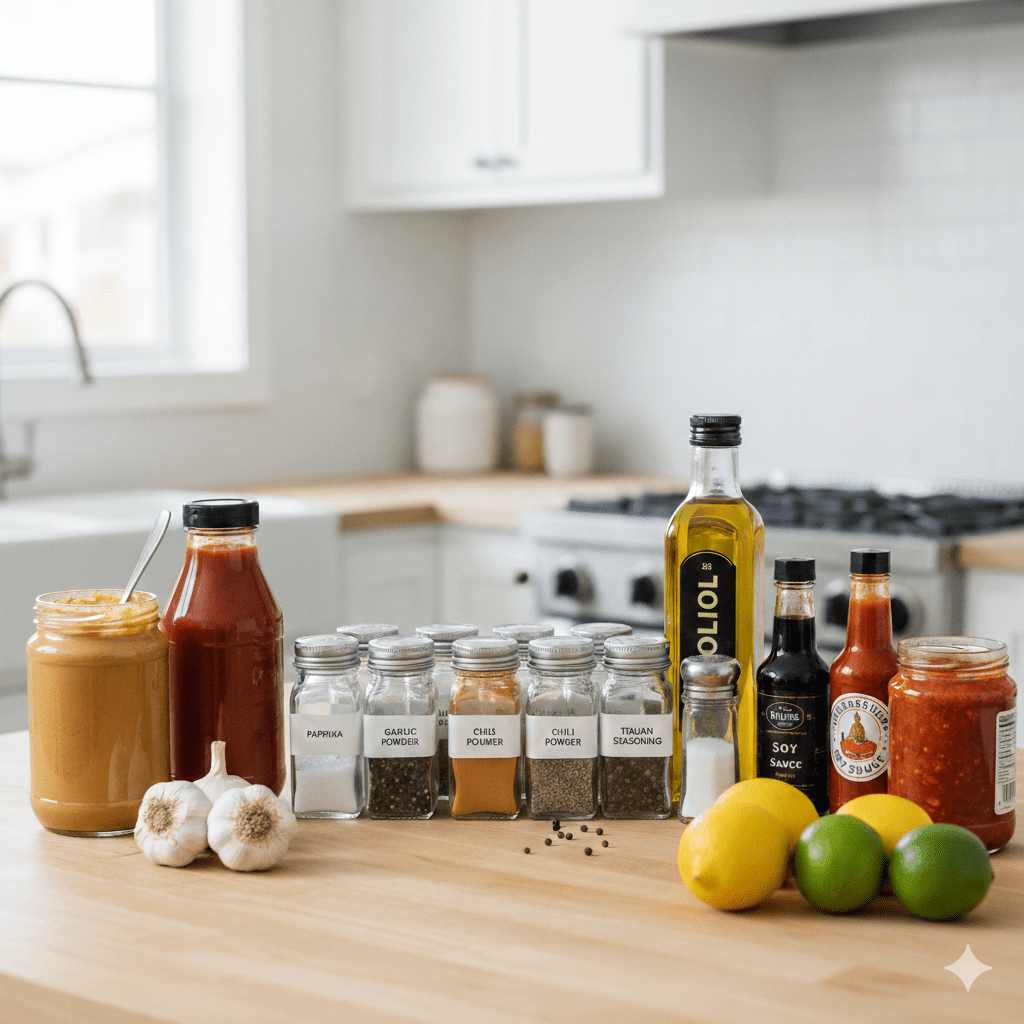
Essential Spices
- Paprika, garlic powder, cumin, chili powder, Italian seasoning, salt, pepper
- Cost: ~$1–$2 each (but they last months)
- Pro tip: Buy the store-brand spices — they’re the same product at half the price.
Sauces to Keep on Hand
- Soy sauce (~$2)
- Hot sauce (~$2)
- Tomato sauce/passata (~$1–$2)
- Salsa (~$2–$3)
- Olive oil (~$4–$6 for a bottle that lasts a month)
Flavor Boosters
- Lemons or limes (~$0.50–$1.00 for 2–3)
- Garlic (a head costs ~$0.50 and lasts 2 weeks)
- Peanut butter (~$3–$4 per jar — also a protein source: 7g per 2 tbsp)
Your Weekly High Protein Grocery List on a Budget
Here’s what a typical week looks like — total cost, total protein, and what you’d make with it:
The List
| Item | Quantity | Est. Cost | Protein |
|---|---|---|---|
| Eggs | 1 dozen | $4.00 | 72g |
| Chicken thighs | 1 kg | $5.00 | 200g |
| Canned black beans | 2 cans | $2.00 | 28g |
| Canned tuna | 2 cans | $3.00 | 50g |
| Greek yogurt | 500g | $4.00 | 50g |
| Rice | 1 kg | $2.50 | 27g |
| Oats | 500g | $1.50 | 65g |
| Frozen veggies | 1 bag | $2.00 | — |
| Onions | 3 | $1.00 | — |
| Bananas | 1 bunch | $0.75 | — |
| Bread/tortillas | 1 pack | $2.50 | — |
| Spinach | 1 bag | $2.50 | — |
| TOTAL | ~$30.75 | ~492g |
That’s almost 500g of protein for about $31 — and we haven’t even counted the protein from rice, oats, bread, and beans fully. Add the monthly pantry items (spices, sauces, peanut butter) and you’re looking at $35–$45 per week total.
What You’d Make With This List
- Breakfasts: Overnight oats with yogurt and banana (x3), scrambled eggs on toast (x4)
- Lunches: Tuna and bean salad (x3), chicken and rice bowls (x4)
- Dinners: Chicken thighs with roasted potatoes and veggies (x3), bean and rice burritos (x4)
- Snacks: Hard-boiled eggs, yogurt with fruit, peanut butter toast
That’s 7 days of meals, all high-protein, all under $5 per serving.
How to Scale This List
For Two People
Double the proteins and carbs. Keep vegetables and sauces the same (you’ll use them faster but buy the same items). Expected weekly cost: ~$55–$70.
If You Have More Budget (~$50–$60/week)
Add these upgrades:
- Ground turkey (500g) — more variety in your protein rotation
- Salmon (canned or frozen) — omega-3s on a budget
- Cheese — a block of cheddar for cooking and snacking
- Extra fresh vegetables — bell peppers, tomatoes, cucumber
If You Have Less Budget (~$20–$25/week)
Focus on:
- Eggs (2 dozen)
- Dried lentils or split peas (instead of canned beans — much cheaper)
- Rice (2 kg bag)
- Oats (1 kg bag)
- Frozen vegetables
- Peanut butter
This stripped-down list still gives you 400+ grams of protein per week for around $20.
Mistakes to Avoid With Your High Protein Grocery List
Buying pre-marinated or pre-seasoned meat. You’re paying an extra $2–$3 per kg for spices you already have at home. Buy plain chicken and season it yourself.
Ignoring the freezer section. Fresh is not always better. Frozen chicken, fish, and vegetables are often cheaper and just as nutritious.
Buying too much variety in one trip. You don’t need 5 different proteins and 8 different vegetables. Pick 2–3 proteins and 2–3 veggies. Rotate next week.
Not checking unit prices. The bigger bag isn’t always cheaper. Check the price per kg or per 100g (usually printed in small text on the shelf tag) to compare.
Shopping when hungry. This sounds like a cliché, but it’s real. Studies show you spend 20–30% more when you shop on an empty stomach. Eat before you go.
FAQ
How much protein do I actually need per day?
Most nutritional guidelines suggest 0.7–1g per pound of body weight if you’re active. For a 70 kg (154 lb) person, that’s roughly 110–155g per day. This grocery list provides about 70g per day from protein sources alone — the rest comes from carbs and other foods that add up throughout the day.
Is it possible to eat enough protein without meat?
Yes. Eggs, Greek yogurt, beans, lentils, peanut butter, and oats all provide significant protein. A vegetarian on this plan can still hit 100g+ per day by combining these sources.
Should I buy organic or free-range?
If it fits your budget, go for it. But from a pure protein-per-dollar perspective, conventional eggs and chicken provide the same macros. Don’t let perfect be the enemy of good — regular groceries are perfectly fine.
How long does this grocery list last?
One person, 7 days, 3 meals a day. Some items (rice, oats, spices) will carry over into the following week, which makes the second week even cheaper.
Can I use this list for meal prep?
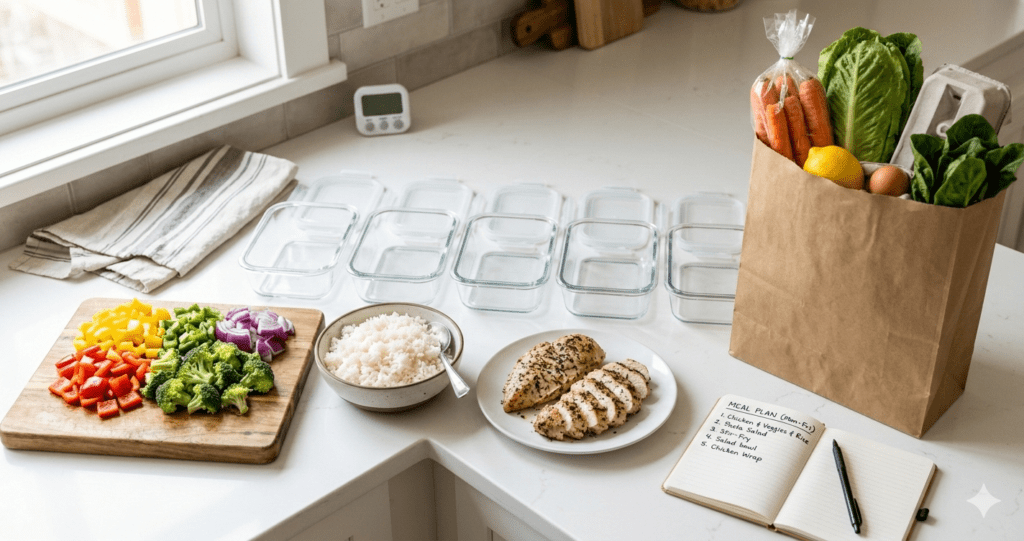
Absolutely — that’s the whole point. Cook the chicken and rice on Sunday, hard-boil the eggs, portion the beans, and prep your overnight oats. You’ll spend 1–2 hours and have most of the week handled.
Final Thoughts
You don’t need expensive supplements, fancy ingredients, or a huge budget to eat high-protein. You need a plan, a short list of affordable staples, and the discipline to actually stick to it. This grocery list is what I buy almost every week — it’s boring, it’s simple, and it works.
Print it out, take it to the store, and see for yourself. Your wallet and your protein goals will both thank you.
For more budget-friendly high-protein recipes and meal prep guides, check out our other posts on PowerMealKitchen.